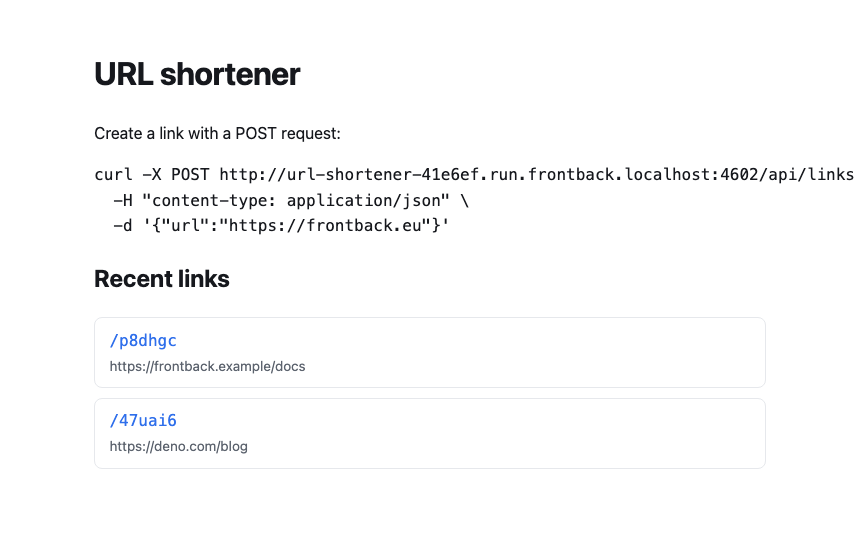
Pošlete dlouhou URL, dostanete krátký kód a přesměrování přes 302.
libsqlredirectsstorage
Pošlete URL na /api/links a dostanete krátký kód; návštěva /<code> odpoví přesměrováním 302 na původní odkaz. Odkazy jsou v libsql databázi, která vznikne a propojí se při nasazení jako LINKS_DB, takže connection string nenese žádný token a v kódu není žádné heslo.
Kódy jsou krátké a náhodné. Když je nějaký už obsazený, vložení selže na primárním klíči a zkracovač prostě zkusí jiný, takže se kolize řeší bez služby na unikátní identifikátory. Přijímají se jen http a https URL; cokoli jiného skončí chybou 422, aby zkracovač nikdy nepřesměroval návštěvníka na javascript: nebo file: URL.
// A URL shortener. POST a long URL to /api/links and get back a short code;// visiting /<code> redirects there with a 302. Links live in a libsql database// that was created and linked for you at deploy time: its connection string// arrives in LINKS_DB as a tokenless URL, with credentials injected by the// platform at the network edge, so no secret ever appears in this code.import{ createClient }from"npm:@libsql/client@0.14.0/web";const db =createClient({ url:Deno.env.get("LINKS_DB")!});typeLink={ code: string; url: string; created_at: string };constALPHABET="abcdefghijklmnopqrstuvwxyz0123456789";exportdefaultasync(req:Request):Promise<Response>=>{await db.execute(`CREATE TABLE IF NOT EXISTS links (
code TEXT PRIMARY KEY,
url TEXT NOT NULL,
created_at TEXT NOT NULL DEFAULT (datetime('now'))
)`,);const url =newURL(req.url);const{ pathname }= url;// Create a short link. Body: { "url": "https://..." }if(req.method ==="POST"&& pathname ==="/api/links"){const body =await req.json().catch(()=>null);const target =typeof body?.url ==="string"? body.url.trim():"";// Only http(s) links are allowed. Reject anything else with a 422 so we// never store a "javascript:" or "file:" URL and redirect a visitor to it.if(!isHttpUrl(target)){returnjson({ error:"Provide an http or https URL."},422);}const code =awaitcreateUniqueLink(target);returnjson({ code, url: target, short:`${url.origin}/${code}`},201);}// Follow a short link: GET /<code> -> 302 redirect to the stored URL.const code = pathname.slice(1);if(req.method ==="GET"&&/^[a-z0-9]+$/.test(code)){const found =await db.execute({
sql:"SELECT url FROM links WHERE code = ?",
args:[code],});if(found.rows.length ===0){returnjson({ error:"Unknown code."},404);}returnnewResponse(null,{
status:302,
headers:{ location:String(found.rows[0].url)},});}// Index: a form plus the most recent links.if(req.method ==="GET"&& pathname ==="/"){returnrender(awaitrecentLinks(), url.origin);}returnjson({ error:"Not found."},404);};// Insert with a fresh random code, retrying if that code is already taken.// The PRIMARY KEY makes a duplicate insert fail, which we catch and retry.asyncfunctioncreateUniqueLink(target: string):Promise<string>{for(let attempt =0; attempt <5; attempt++){const code =randomCode();try{await db.execute({
sql:"INSERT INTO links (code, url) VALUES (?, ?)",
args:[code, target],});return code;}catch(error){if(String(error).includes("UNIQUE"))continue;// collision: try againthrow error;}}thrownewError("could not allocate a unique code");}functionrandomCode(length =6): string {const bytes = crypto.getRandomValues(newUint8Array(length));let code ="";for(const byte of bytes) code +=ALPHABET[byte %ALPHABET.length];return code;}functionisHttpUrl(value: string): boolean {try{const parsed =newURL(value);return parsed.protocol ==="http:"|| parsed.protocol ==="https:";}catch{returnfalse;}}asyncfunctionrecentLinks():Promise<Link[]>{const result =await db.execute("SELECT code, url, created_at FROM links ORDER BY created_at DESC LIMIT 50",);return result.rows.map((row)=>({
code:String(row.code),
url:String(row.url),
created_at:String(row.created_at),}));}functionrender(links:Link[], origin: string):Response{const rows = links.length ===0?`<p class="empty">No links yet.</p>`: links
.map((link)=>`<li>
<a href="/${link.code}">/${link.code}</a>
<span>${escapeHtml(link.url)}</span>
</li>`,).join("\n ");const body =`<!doctype html>
<html lang="en">
<head>
<meta charset="utf-8" />
<meta name="viewport" content="width=device-width, initial-scale=1" />
<title>URL shortener</title>
<style>
body { max-width: 42rem; margin: 3rem auto; padding: 0 1.25rem;
font: 16px/1.6 system-ui, sans-serif; color: #16181d; }
h1 { letter-spacing: -0.02em; }
code { font-family: ui-monospace, monospace; }
ul { list-style: none; padding: 0; display: grid; gap: 0.6rem; }
li { display: grid; gap: 0.15rem; border: 1px solid #e6e8ec;
border-radius: 8px; padding: 0.6rem 0.9rem; }
li a { font-family: ui-monospace, monospace; color: #2f6feb;
text-decoration: none; }
li span { color: #5c636e; font-size: 0.85rem; word-break: break-all; }
.empty { color: #5c636e; }
</style>
</head>
<body>
<h1>URL shortener</h1>
<p>Create a link with a POST request:</p>
<pre><code>curl -X POST ${origin}/api/links \\
-H "content-type: application/json" \\
-d '{"url":"https://frontback.eu"}'</code></pre>
<h2>Recent links</h2>
<ul>
${rows}
</ul>
</body>
</html>
`;returnnewResponse(body,{
headers:{"content-type":"text/html; charset=utf-8"},});}functionjson(data: unknown, status =200):Response{returnnewResponse(JSON.stringify(data),{
status,
headers:{"content-type":"application/json; charset=utf-8"},});}functionescapeHtml(value: string): string {return value
.replace(/&/g,"&").replace(/</g,"<").replace(/>/g,">").replace(/"/g, """).replace(/'/g, "'");}